

On Forgetting
And also soup

One of the greatest gifts my creative brain has offered me is the power to forget. And I mean that pretty literally. Over the two decades I’ve been writing earnestly, I have repeatedly felt, as I’ve sat down to write, that I’ve forgotten how to write a poem.
It was panic-inducing at first. Maybe because I had just paid $50,000 for a piece of paper that said I had met the academy’s expectations of someone who knows how to write a poem. (It remains the most expensive thing I own.) There was also an accompanying identity crisis—who am I if I am not a poet??!?!!!? [unintelligible shrieking]
When I did start writing again, poetry felt different. Unfamiliar. Kinda new. And in that way—exciting. Dangerous. Surprising.
One of my favorite Robert Frost quotes (and they’re aren’t many of those since he was kind of a jerk): “No surprise for the writer, no surprise for the reader.”
Do you know what happens inside a cocoon?
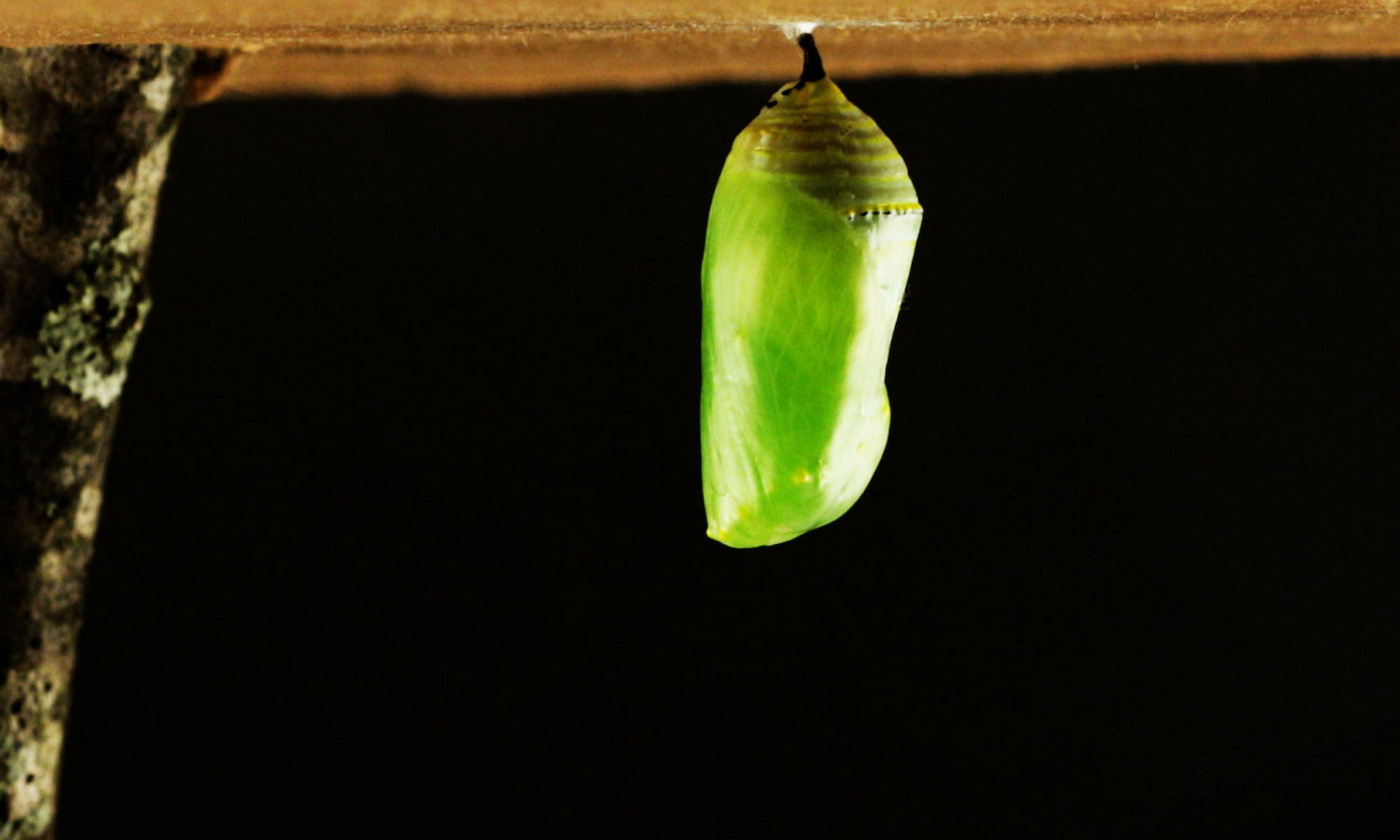
Caterpillars tuck themselves inside, every wriggly little millimeter.
Then, they turn to goo. Their bodies liquefy. All of it! Even their mouths. Their eyes. Their little legs. Goo.
There are several kinds of creatures that undergo a full metamorphosis like this, but the most famous of them is certainly the butterfly, probably because everybody loves a butterfly. Contrast this to moths, who are much less beloved, but sometimes more beautiful.
It’s pretty gross, right? This soupy mess in that little cocoon. And then a bit later, that shell cracks open and out flies a beautiful butterfly. Not one speck of goo to be found.
It’s soup season. It’s my favorite of the four seasons: Soup, Awards, Beach, and Light Cardigan.
Soup is really nourishing to me, and I spent all of fall and winter annoying Bill with a weekly soup recipe (just kidding, he also likes soup but I do abuse the privilege). Soup is great because you mostly can’t ruin it. You can always rebalance its elements as you go, and some of it you can’t evaluate until you get to the end. (Season with salt and pepper constantly as you go is the best advice I can give you on soups; waiting to add it all at the end doesn’t have the desired results.)
You can fit a complete meal inside a soup. For instance, the only appropriate action to take with kale is to drown it in a soup. Drop some proteins (meat/beans/cheese) in there. Get your structural veggies (celery, carrot, onion) in early and let them sweat. Season with good stuff in the cupboard. Then, let it cook.
Because I put these two things in sequence, your brain might have cooked up a new idea: caterpillar soup. But let’s not go there.
Instead, let’s focus on letting things cook.
Soup works because of simmering, and also because of resting.
Simmering is the process by which flavors commingle, structures in your food break down, and, by letting out some liquid as steam, your soup condenses and thickens.
Someone took me out of the Midwest, but you can never take the Midwest out of me. I love a thick, stewy soup. I love a slow cooker. I love a soup someone tells you will “stick to your ribs.”
Some people only turn to soup when they’re feeling sick. Soup feels like medicine. I get that. But I’m always turning to soup. Not literally, like a caterpillar does, but spiritually, like soup is a life coach full of good ideas. Soups are full of good ideas. Even beer cheese soup. That’s two good ideas right there!
I recently learned that buried in all that caterpillar goo are magical cells that contain the blueprints for the butterfly body. They were inside the caterpillar all along, but this is their time to shine. They are the architects of wings, legs, antennae, even the butterfly’s famous and kinda icky long tongue.
The reconstruct the being in the cocoon, and then it breaks out and flies away and, from what I understand, immediately gets really into dating.
Or, to put it another way, it really wants to make something. (A baby.)
I like to think of my brain—the concept, not the actual thing—as a soup.
A soup of thoughts, feelings, ideas, facts, and experiences. It’s all in there simmering together. Connections between this weird thing I saw when I was seven glom onto something I read in a college textbook, and now something new has been formed.
What all of it actually is, though, is poetry soup.
I love my little subconscious brain. It’s so smart, and it’s always working in the background. It’s much smarter than the rest of my brain, and it’s also a little witchy and magical. I mean—dreams. There’s nothing witchier than that. But also—poems. Pretty witchy stuff when you think about it.
My subconcious mind is a little hard-working processing plant that filters through my soup (read: brain) and sucks up the weirdest, wildest, witchiest connections it can find. If you’ve ever seen what ends up in a pool filter at the end of a long summer’s day, that’s approaching the kind of weird collisions happening in your subcon. My writing always works best when I trust the subcon. I remember one time I was writing a poem in Breakup/Breakdown and I sent an image from my subcon to a poet friend and I was like, “This is so gross! Can you believe my brain put this together.” And he said, “Keep it in.” And he was right. It was weird and uncomfortable and it grossed me out but there was something real about it.
One of my undergrad teachers taught me that the word uncanny in German is unheimlich, and you won’t be surprised to learn that this came up in a class about Freud and that Freud was the one who really tried to make unheimlich happen. But what is really interesting about this word is that it loosely translates back to English as “un-home-ly,” or something that makes us feel uncomfortable. Pushed out of our homes.
I think the subconscious mind sucks up all that uh-home-ly-ness in our minds, but as writers it’s only too eager to show it to us, like a child opening its mouth to reveal all the chewed up food inside. (“Do you like seafood? [opens mouth] See? Food!”)
I started writing about forgetting but I ended up focusing on cooking soup and biology and how we never really forget anything. It all becomes soup. [stomach growls]
I never really forgot how to write a poem. I thought I did. But my brain was quietly reinventing how I wrote a poem. And by extension, it changed what a poem was when I wrote it.
What a gift that is. That quiet. That change. That discovery. That…surprise for the reader?
Everything I’ve ever learned about writing poetry is forever a part of me. Those craft lessons, those intuitions—they’re like those little caterpillar cells that build butterflies.
The goo—my brain soup, language, even technology—those are the builder’s tools.
I yearn always for that feeling of surprise I get when I write something I didn’t even know I could.
Time is an invention, but those of us on the Gregorian calendar have collectively (and arbitrarily) agreed that we just started a new year. And culturally, some of us associate that with a new beginning—though really this is just a continuation of something we’ve already been doing. I haven’t thought of my guide word this year (and no, it’s not going to be “soup”), but I am thinking a lot about resisting the urge to be new.
I am not new. I am persisting.
The butterfly isn’t new. It’s just a new outfit.
The soup isn’t new. Everything about it already existed. I just forced them into the same room.
How am I reorganizing myself, though? How am I building something from the parts given to me over these past years? Everything I’ve learned?
I don’t know yet.
But to you, dear reader, I wish you a joyful continuation of discovery. May you forget what doesn’t serve you. May your soup be bubbly and nourishing. And may you fly on wings you never knew you could have.